
Buying Guides
Silicone vs TPE vs Glass A Sex Toy Material Buying Guide
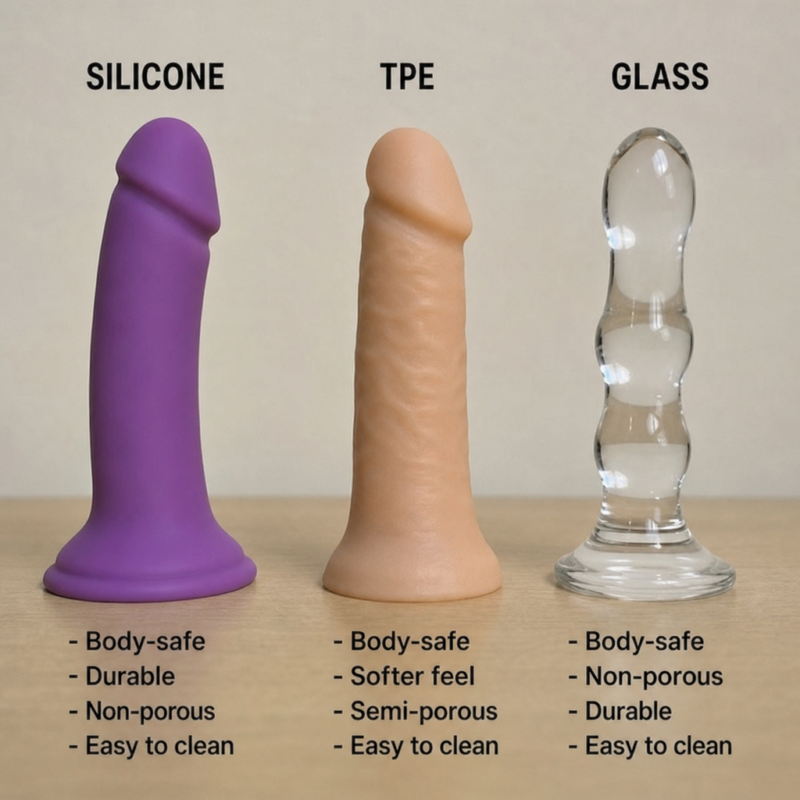
Choosing a sex toy material is not just about texture. It affects how the toy feels, how long it lasts, how easy it is to clean, what lube you can use, and whether the product is a good fit for your body. This guide compares silicone, TPE, and glass in plain language so you can shop for safe sex toys with more confidence and fewer surprises.
If you are deciding between soft, realistic, firm, flexible, or temperature-responsive toys, the material is one of the biggest clues. Silicone, TPE, and glass can all have a place in an adult toy collection, but they are not interchangeable.
What is the safest sex toy material to buy?
For most shoppers, body-safe silicone and borosilicate glass are the easiest materials to recommend because they are nonporous, durable, and simple to clean when made by reputable manufacturers. TPE can feel soft and lifelike, but it is porous, which means it needs more careful cleaning, should not be shared without a barrier, and usually does not last as long. The safest choice depends on your body, budget, toy type, and care routine, but non-toxic sex toys made from clearly identified materials are always the better starting point.
That does not mean every silicone toy is automatically excellent or every TPE toy is automatically bad. Quality still matters. A well-made TPE stroker from a transparent brand can be enjoyable and appropriate for solo use, while a mystery “silicone-like” toy with no material details is something to avoid. The goal is not to chase one perfect material; it is to understand the tradeoffs before you buy.
A good sex toy material should be:
- Clearly labeled, not described only as “jelly,” “real feel,” or “skin-like” with no material name.
- Body-compatible, especially if it touches internal tissue or sensitive skin.
- Easy to clean, with instructions that match the toy’s design.
- Compatible with your preferred lube, condoms, and storage method.
- Durable enough for the way you plan to use it, whether that means frequent solo play, partner play, travel, or temperature play.
The quick comparison: silicone vs TPE vs glass
Before getting into the details, it helps to see the materials side by side. This Silicone vs TPE vs Glass: A Sex Toy Material Buying Guide is not about declaring one universal winner. It is about matching the material to the person and the use case.
| Material | Feel | Porosity | Cleaning | Durability | Best for |
|---|---|---|---|---|---|
| Silicone | Smooth, flexible, sometimes firm or plush | Nonporous | Easy when waterproof or non-motorized | High | Dildos, vibrators, plugs, strokers, beginner-friendly toys |
| TPE | Very soft, stretchy, realistic | Porous | More careful; cannot be fully sterilized | Moderate to low | Sleeves, strokers, soft external toys, budget-friendly realistic textures |
| Glass | Hard, smooth, slick, weighty | Nonporous | Very easy if intact and non-electronic | High if properly made and handled | Dildos, wands, temperature play, firm pressure |
Silicone offers the broadest mix of comfort, safety, and practicality. It can be silky, matte, squishy, dense, flexible, or firm depending on the formulation and toy design. That versatility is why silicone adult toys are common across many categories, from silicone dildos to compact vibrators and silicone sex toys for men.
TPE is valued for softness. It can feel more skin-like than silicone, which is why many masturbation sleeves and realistic toys use it. The tradeoff is that TPE is porous, so it can hold moisture, bacteria, and residue more easily than nonporous materials. It also tends to break down faster, especially if stored poorly or exposed to incompatible products.
Glass is the opposite of TPE in feel. It is rigid, sleek, and naturally slick with lube. Quality glass toys are usually made for firmness, precision, and temperature play. They are not soft or forgiving, so they require more care during use, but they are excellent for people who like pressure and easy cleanup.
Silicone sex toys: versatile, durable, and easy to love
Silicone is one of the most popular materials for modern adult toys because it balances body safety with comfort. Good-quality silicone is nonporous, flexible, and resistant to absorbing fluids. That makes it a strong choice for people who want safe sex toys that are not difficult to maintain.
Silicone can be used in many toy types. You will find silicone dildos, external vibrators, suction toys, penis rings, prostate toys, plugs, sleeves, and many other designs. Silicone sex toys for men may include strokers, vibrating sleeves, penis rings, prostate massagers, and textured external toys. For shoppers who want one dependable material across multiple categories, silicone is often the easiest place to begin.
What “body-safe silicone” really means
Body-safe silicone usually refers to silicone that is nonporous, stable, and suitable for intimate contact when used as directed. It should not contain mystery softeners that leach out, and it should not have a strong chemical smell. Many brands also use phrases like “medical grade silicone sex toys,” but that wording should be treated carefully. “Medical grade” can signal a higher-quality material, yet it is not a magic phrase that proves the entire toy is better designed, safer, or appropriate for every body.
The more useful question is whether the brand is transparent. Does it name the material clearly? Does it give cleaning instructions? Does it explain lube compatibility? Does the toy feel stable rather than oily, sticky, or strongly scented? Clear material information matters more than vague luxury claims.
Why silicone works for so many toy designs
Silicone can be molded into different densities and finishes. A slim beginner dildo might use a firmer silicone for easy insertion and control. A dual-density toy may have a firmer core with a softer outer layer for a more realistic feel. A vibrator may use a velvety silicone coating over a motorized body to make the surface comfortable against skin.
This flexibility makes sex silicone toys appealing to many different users. Someone who wants firmness can choose a dense silicone dildo. Someone who wants external stimulation can choose a small silicone vibrator. Someone who wants toys that are less fussy to clean can choose waterproof silicone designs and avoid porous materials.
Where silicone may not be ideal
Silicone is not perfect for everyone. Some silicone toys create more drag than glass, so they need enough lubricant for comfortable use. Silicone also varies a lot in firmness, so a toy that looks soft online may feel much denser in person. For internal toys, size, shape, and flexibility matter just as much as material.
Another issue is lube compatibility. The best lube for silicone sex toys is usually water-based lubricant because it is widely compatible and easy to wash away. Some silicone lubes may react with some silicone toys, especially if the toy or lube manufacturer does not confirm compatibility. If you want to use silicone lubricant with a silicone toy, check the instructions and do a small patch test on the toy’s base if the brand allows it.
How do you clean silicone sex toys properly?
To clean silicone sex toys, wash them before and after use with warm water and mild, fragrance-free soap, then rinse thoroughly and let them dry completely before storage. If the toy is non-motorized and the manufacturer says it is safe, some silicone toys can be boiled or sanitized more deeply, but motorized toys should only be cleaned according to their waterproof rating and care instructions. Good silicone toy care is simple, but it depends on whether the toy has electronics, seams, charging ports, or textured areas.
For everyday cleaning, do not overcomplicate the routine. Most silicone adult toys only need consistent, careful washing. Harsh household cleaners, abrasive scrubbers, scented soaps, and alcohol-heavy products can damage surfaces or irritate skin if residue remains.
A practical cleaning routine looks like this:
- Check the toy’s instructions first. Waterproof, splashproof, and non-waterproof are not the same thing.
- Rinse away visible residue. Use warm water, not extreme heat unless the brand says it is safe.
- Wash with mild soap. Pay attention to ridges, texture, seams, and the base.
- Rinse thoroughly. Soap left behind can irritate sensitive tissue.
- Dry completely. Use a clean towel or let the toy air-dry in a clean place.
- Store separately. A lint-free pouch helps prevent dust and material contact.
For toys used anally, shared with a partner, or used during infection recovery, take extra care. Use condoms on toys when switching between partners or between anal and vaginal use. Replace the condom when changing use area. If you are dealing with recurring irritation, pain, unusual discharge, or infection concerns, pause toy use and speak with a healthcare professional.
TPE sex toys: soft, realistic, and higher-maintenance
TPE, short for thermoplastic elastomer, is a soft, flexible material often used in realistic toys. It can be stretchy, squishy, and skin-like in a way that many users enjoy. For sleeves, strokers, and some external toys, TPE can provide a level of softness that firmer silicone may not match.
The main tradeoff is porosity. TPE has tiny spaces in the material where moisture and residue can linger. Because of this, TPE cannot be cleaned as thoroughly as nonporous silicone or glass. That does not mean it can never be used, but it does mean it is best treated as a personal-use material with a shorter lifespan.
Why people choose TPE
TPE is common in toys designed for softness and realism. A stroker made from TPE can compress around the body, stretch more easily, and offer detailed internal textures. Some users prefer that plush, yielding feel over the firmer pressure of silicone or glass.
TPE toys may also be more budget-friendly, which can make them attractive to beginners. Someone exploring a new toy category might not want to invest in a premium silicone option right away. In that case, a TPE toy can be a lower-commitment way to learn what shapes, textures, or sensations feel good.
The care limits of TPE
The drawback is that TPE requires more caution. It should be cleaned immediately after use, dried thoroughly, and stored in a cool, dry place. Even with good care, it may become tacky, discolored, or degraded over time. If the toy develops an odor that does not wash away, visible cracks, sticky patches, or surface changes, it is time to replace it.
TPE toys should not usually be shared unless covered with a condom, and even then, they are better suited to solo use. They are also more vulnerable to damage from oils, incompatible lubes, heat, and contact with other toy materials. When in doubt, store TPE separately in its own bag or case.
When TPE may be the right choice
TPE can make sense when softness is your top priority and you are comfortable with extra maintenance. It may be a good fit for external toys, strokers, or realistic sleeves used by one person. It is less ideal for toys that will be shared, used internally by multiple people, or expected to last for years.
If you want non-toxic sex toys with minimal maintenance, silicone or glass will usually be easier. If you want the softest possible sensation and understand the hygiene tradeoffs, TPE may still have a place in your collection.
Glass sex toys: sleek, firm, and surprisingly practical
Glass toys can look intimidating at first, but they are often simple to use and clean. Most quality glass adult toys are made from strong borosilicate glass, which is designed to resist thermal shock better than ordinary glass. When intact and properly made, glass is nonporous, smooth, and highly compatible with lubricants.
The biggest difference is firmness. Glass does not flex or compress. Every curve, bulb, and ridge feels more direct because the material does not give way under pressure. Some people love this precision, while others find it too intense.
Why glass feels different
Glass has a naturally slick surface, especially with lubricant. This can make insertion smoother with less lube than a draggy silicone surface might require. Its weight can also create a fuller sensation, and curved glass toys can apply targeted pressure without needing a large size.
Temperature play is another reason people choose glass. A glass toy can be warmed or cooled in water before use, creating gentle temperature contrast. The key is moderation: never use extreme heat or cold, and always test the toy against the inside of your wrist before intimate contact.
Glass safety basics
A glass toy should be smooth, free of chips, and made for sexual use. Inspect it before every session. If you see cracks, sharp edges, clouding inside a damaged area, or any chip in the surface, stop using it.
Do not use decorative glass objects as sex toys. Purpose-made glass toys are shaped, finished, and inspected for intimate use. Household items are not designed for the same type of pressure, movement, or body contact.
Glass may not be the best choice for vigorous thrusting or users who prefer soft, flexible toys. It is excellent for slow, controlled use, firm pressure, and easy cleaning.
Lube compatibility matters more than most shoppers think
Lubricant can transform the way a toy feels. It can reduce friction, improve comfort, and make play feel smoother. But the wrong lube can damage some toys or create an unpleasant surface texture.
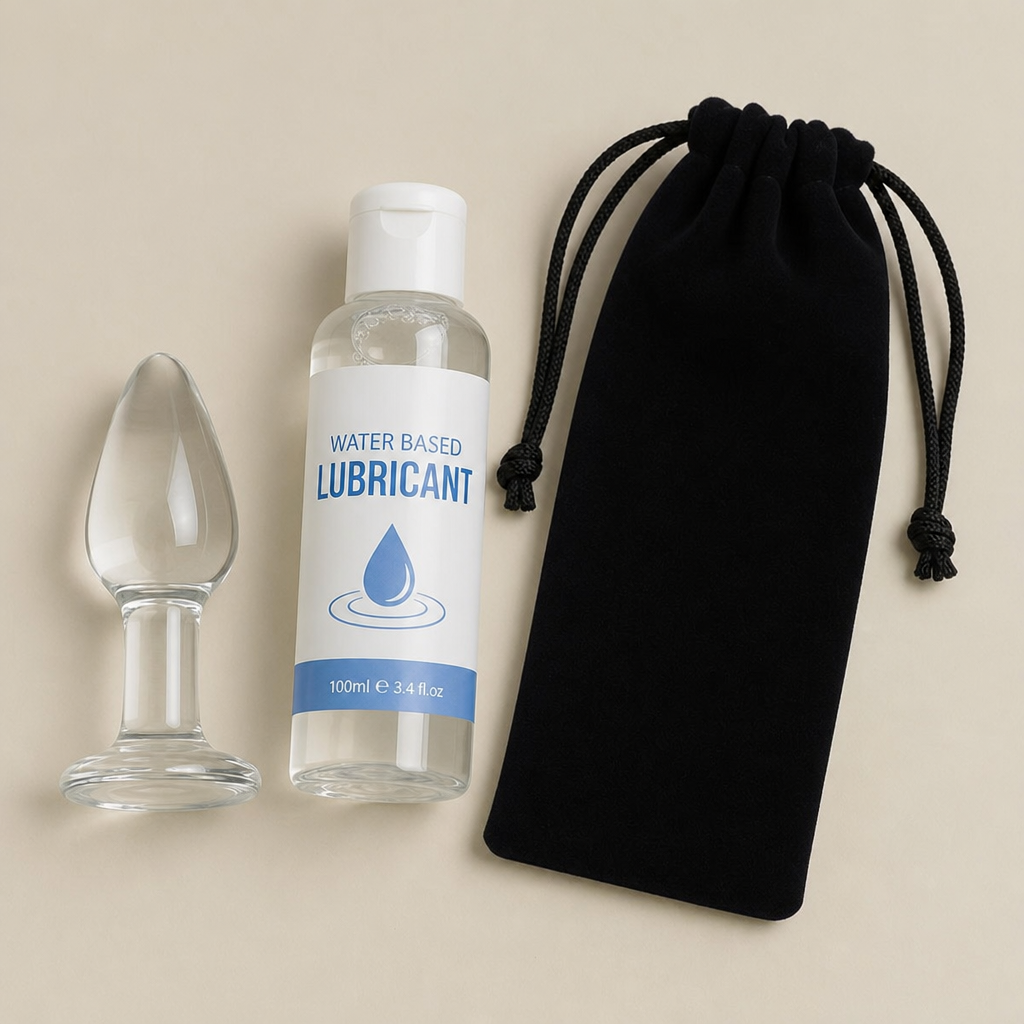
For silicone sex toys, water-based lube is the safest default. It works with most toys and condoms, washes away easily, and is less likely to cause material issues. If you are searching for the best lube for silicone sex toys, start with a high-quality water-based formula that is fragrance-free and designed for intimate use.
Silicone-based lube is long-lasting and slick, but it can be risky with silicone toys unless the manufacturer confirms compatibility. Sometimes silicone lube bonds with or softens the surface of a silicone toy, leaving it tacky or damaged. A patch test on a small, less visible area can help, but manufacturer guidance is better.
Oil-based lubes can be enjoyable for some external uses, but they may damage certain toy materials and are not compatible with latex condoms. They can also be harder to clean from porous toys. For TPE, avoid oils unless the toy maker specifically says otherwise. For glass, lube compatibility is broad because glass is nonporous, but condom compatibility and body sensitivity still matter.
Use this quick guide:
- Silicone toy + water-based lube: Usually the safest, easiest pairing.
- Silicone toy + silicone lube: Use only if the toy brand confirms compatibility or after a cautious patch test.
- TPE toy + water-based lube: Usually the best choice.
- TPE toy + oil-based lube: Often a bad idea unless the brand says it is safe.
- Glass toy + most lubes: Material-compatible, but choose based on condoms, cleanup, and skin sensitivity.
Hypoallergenic sex toys and sensitivity concerns
The phrase “hypoallergenic sex toys” usually means toys made from materials less likely to irritate many users, such as quality silicone or glass. It does not mean a toy is guaranteed to work for every body. People can react to fragrances, cleaning residues, lubricants, dyes, condoms, storage dust, or friction as well as to the toy material itself.
If you have sensitive skin, choose simple, nonporous materials and keep your routine minimal. A smooth silicone or glass toy, mild soap, thorough rinsing, and a gentle water-based lube are often better than a complicated setup with scented products. Avoid toys with mystery coatings, strong odors, or unclear material descriptions.
What about sex toys for silicone allergy?
True silicone allergy appears to be uncommon, but discomfort can still happen for many reasons. If you suspect silicone is a problem for you, glass may be the simplest nonporous alternative because it contains no soft silicone surface. Stainless steel is another common nonporous option, though it is outside the main focus of this guide.
When shopping for sex toys for silicone allergy concerns, look for clearly labeled glass toys and avoid products that mix materials unless every body-contact part is identified. Also consider the lube, cleaner, condoms, and laundry products involved. What feels like a material allergy may be irritation from something else in the routine.
If you have a known allergy, a history of severe reactions, or symptoms such as swelling, burning, rash, or pain, stop use and get medical advice. A buying guide can help with material choices, but it cannot diagnose an allergy or replace personal medical guidance.
How to choose the right material for your needs
The best material depends on how you plan to use the toy. A beginner buying a first internal toy may want soft-to-medium silicone because it is comfortable, durable, and easier to clean. Someone who wants a realistic stroker may prefer TPE despite the care requirements. Someone who enjoys firm pressure may love glass.
Rather than choosing based on trend or appearance alone, think through your actual habits. Do you clean toys immediately or later? Do you share toys with partners? Do you need something travel-friendly? Do you use condoms with toys? Do you prefer strong pressure or soft flexibility? Your answers point toward the best material.
Choose silicone if you want balance
Silicone is a strong all-around option if you want one material that works across many toy styles. It is especially useful for people who value easier cleaning, longer lifespan, and a softer feel than glass. Silicone adult toys also come in many shapes, sizes, and firmness levels, so you can usually find something that fits your comfort level.
Silicone is a particularly good choice for:
- First-time internal toys.
- Vibrators and suction toys.
- Silicone dildos in soft, firm, or dual-density styles.
- Anal toys with safe flared bases.
- Toys used with condoms or shared with careful cleaning.
- People who want a nonporous material without the firmness of glass.
The main thing is to choose quality. Look for clear labeling, reputable retailers, realistic product photos, and care instructions. Avoid anything that claims to be silicone but feels oily, sticky, or heavily scented out of the package.
Choose TPE if softness is the priority
TPE is a good fit when you want a plush, realistic feel and are buying for solo use. It shines in strokers, sleeves, and toys where stretch and softness are part of the experience. Many users choose TPE because it feels more lifelike than firmer materials.
Choose TPE with the understanding that it is higher-maintenance. It should be cleaned promptly, dried completely, and replaced when it shows wear. It is not the best choice for long-term sharing, rough storage, or anyone who wants the easiest possible hygiene routine.
Choose glass if you want firmness and easy cleaning
Glass is ideal for people who enjoy smoothness, weight, and firm pressure. It is also excellent for anyone who wants a nonporous toy that cleans easily and works with many lubricants. A simple glass dildo or wand can last a long time if handled carefully and inspected before use.
Glass is less ideal if you want softness, bend, or a toy that feels forgiving during fast movement. It rewards slower, more intentional use. If you are new to glass, start with a modest size and a simple shape before trying pronounced curves or bulbs.
Material red flags to avoid
Not every adult toy is made with the same level of care. Some products use vague language that sounds sensual but says very little. Words like “jelly,” “realistic,” “skin feel,” or “premium blend” do not tell you whether a toy is nonporous, body-safe, or compatible with your lube.
Be cautious if a toy has:
- No specific material listed. If the product page does not name the material, keep looking.
- A strong chemical smell. Some new-product smell can happen, but harsh odor is a warning sign.
- An oily or sticky surface. This may suggest unstable material or breakdown.
- No cleaning instructions. A reputable product should tell you how to care for it.
- Unrealistic safety claims. “Perfect for everyone” or “completely allergy-proof” is not credible.
- Poorly finished seams or edges. Anything rough can irritate delicate tissue.
- No base on an anal toy. Anal toys need a safe flared base or retrieval design.
These red flags matter because intimate tissue can be sensitive. A toy does not need to be expensive to be thoughtful, but it should be clearly described and well finished.
Storage is part of toy safety
Cleaning gets most of the attention, but storage matters too. Even nonporous toys can collect dust, lint, pet hair, or residue if they are tossed into a drawer. Softer materials can also react when stored in direct contact with other toys.
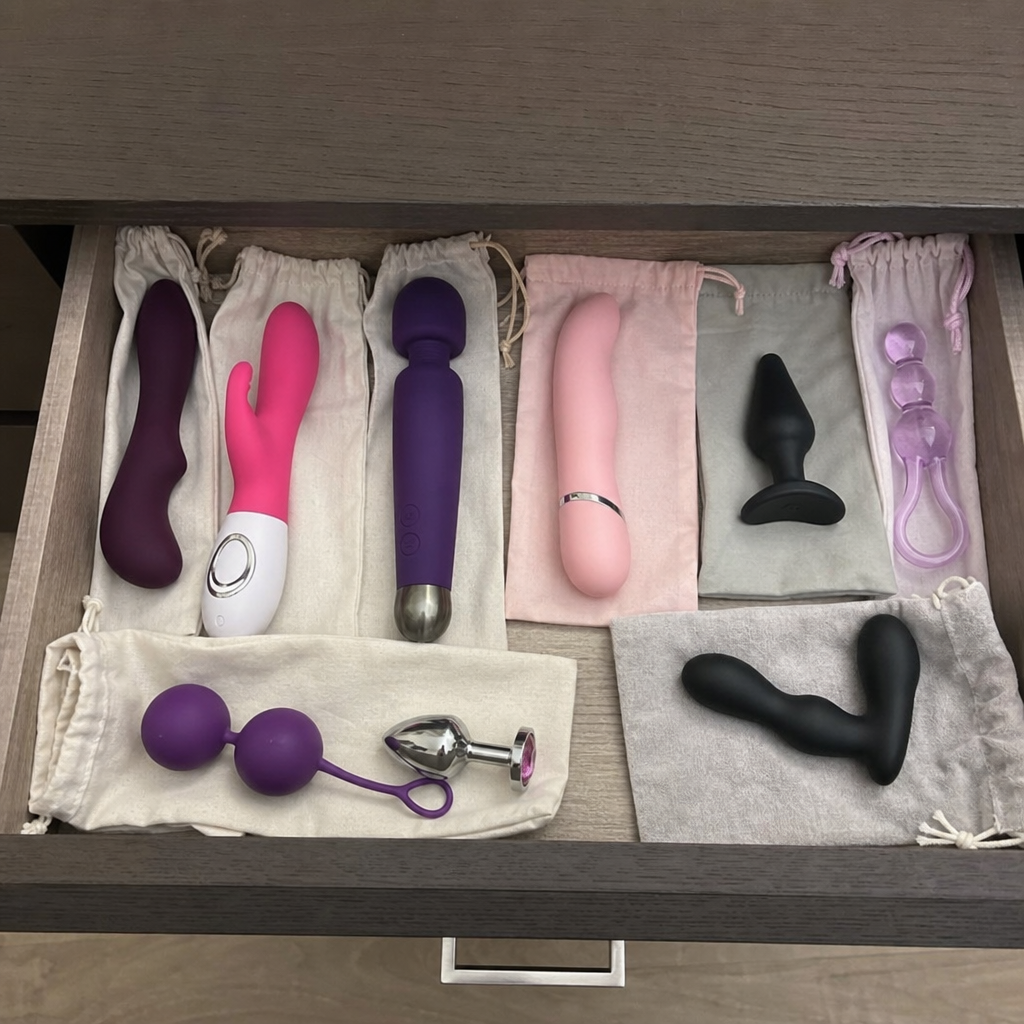
The simplest method is to dry each toy fully and store it in its own pouch, box, or clean container. Keep toys away from direct sunlight, extreme heat, and damp bathrooms. Remove batteries from toys that require them if they will be stored for a long time.
For silicone, separate storage helps protect the surface and keeps the toy clean. For TPE, separate storage is even more important because the material can be more reactive and prone to surface changes. For glass, storage prevents chips, scratches, and accidental impact.
A simple toy care checklist:
- Wash before and after use.
- Let the toy dry completely.
- Store each toy separately.
- Keep charging ports clean and dry.
- Check for cracks, tackiness, odors, or texture changes.
- Use the right lube for the material.
- Replace toys that no longer clean well or feel stable.
Internal vs external toys: material changes the experience
Material choice affects internal and external toys differently. For external stimulation, surface feel and flexibility may matter most. For internal use, shape, firmness, base design, and cleanability become more important.
A soft silicone vibrator may feel gentle externally but too flexible for targeted internal pressure. A glass wand may feel excellent for G-spot or prostate pressure but too firm for someone who prefers cushioning. A TPE sleeve may feel great externally for penis stimulation, yet it may not be the best material for shared internal use because it is porous.
Anal toys need extra attention
For anal play, design is as important as material. Choose toys with a flared base or a handle that prevents the toy from being pulled fully into the body. Smooth silicone and glass are popular because they are nonporous and easier to clean, but firmness and size should be chosen carefully.
Use plenty of body-safe lubricant because the anus does not self-lubricate. Start small, move slowly, and avoid numbing products that may hide discomfort. If a toy is porous, consider using a condom over it and replacing that condom if switching to another body area.
Partner play changes the hygiene equation
If a toy is shared between partners, nonporous materials are easier to manage. Silicone and glass can be cleaned more thoroughly than TPE, and condoms add another layer of protection. If a toy is used between different body areas, change condoms or clean the toy before switching.
Shared play also makes communication part of safety. Talk about cleaning, lube, comfort, and boundaries before use. The best material still needs thoughtful handling.
Price, lifespan, and value
A lower price can be appealing, but value is not only about the checkout total. A toy that lasts longer, cleans easily, and remains comfortable may be a better value than a cheaper toy that needs frequent replacement. Silicone and glass often cost more upfront than basic TPE, but they can offer better durability when cared for properly.
TPE may still be worth buying when the feel is exactly what you want or when you are exploring a category for the first time. Just consider it a material with a shorter expected life. If you use a TPE toy often, watch for changes and replace it before it becomes difficult to clean.
Glass can be a long-lasting option, but it requires careful handling. Dropping a glass toy onto a hard floor can damage it even if it looks sturdy. Silicone is often the most forgiving daily-use material because it can handle normal washing, storage, and repeated use well.
A simple buying framework
When browsing adult toys, it is easy to get distracted by color, shape, vibration patterns, or product names. Those details matter, but material should be one of the first filters. A simple framework can help you make a better choice.
Ask yourself:
- Will the toy be used internally, externally, or both? Internal toys benefit from nonporous materials and easy cleaning.
- Will anyone else use it? Shared toys are easier to manage when they are silicone or glass.
- Do I want soft realism or firm pressure? Choose TPE for softness, silicone for balance, and glass for firmness.
- How much care am I willing to do? TPE needs the most caution; glass and silicone are easier.
- What lubricant do I prefer? Water-based lube is the safest default for most materials.
- Do I have sensitivities? Choose simple, clearly labeled, hypoallergenic sex toys and avoid scented products.
- Can I store it properly? Separate storage protects both the toy and your body.
This process turns shopping from guesswork into a practical decision. You do not need to become a materials expert. You only need enough information to avoid risky products and choose a toy that fits your body and habits.
The bottom line on silicone, TPE, and glass
Silicone, TPE, and glass each offer a different experience. Silicone is the most versatile everyday choice: nonporous, comfortable, durable, and available in many designs. TPE is soft and realistic, but it is porous and needs more careful care. Glass is firm, smooth, nonporous, and easy to clean, but it requires slow use and careful handling.
If you want the easiest path to safe sex toys, start with body-safe silicone or quality glass from a transparent brand. If you choose TPE, treat it as a personal-use, higher-maintenance material and replace it when it shows wear. Whatever you buy, pair it with the right lube, clean it consistently, store it separately, and listen to your body.
A thoughtful material choice makes the whole experience better. It can mean smoother use, simpler cleanup, fewer worries, and a toy that actually fits the way you like to play.
Related products
- 2024 Male sex toy Masturbator Top Silicone Realistic Fake Pussy for Me — $37.00
- MIGYY Wave Stroker Sex Toy For Men — $73.00
- IOBANANA Rock cat paw series Vibrator sex toy — $54.99
- Fleshlight Girls- Jesse Jane’s Pussy Lotus Realistic Male Masturbator — $51.00